
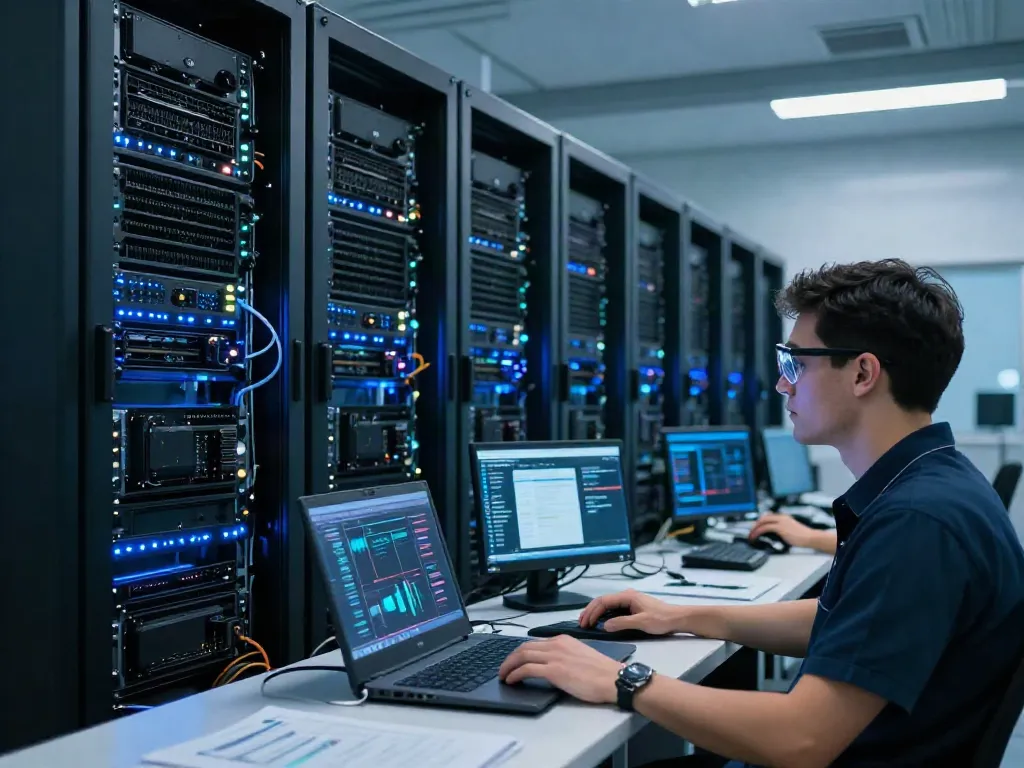
Understanding GPU Computing
GPU computing has revolutionized the landscape of technology, especially in the realm of artificial intelligence (AI) and machine learning. At its core, GPU computing utilizes the parallel processing capabilities of Graphics Processing Units (GPUs) to accelerate computation tasks that are traditionally handled by CPUs. This paradigm shift allows for the efficient execution of complex algorithms, particularly those involved in AI model training and inference. GPU computing is now a vital component in developing and implementing AI systems across various industries.
What is GPU Computing?
GPU computing refers to the use of a GPU, a specialized electronic circuit designed to rapidly manipulate and alter memory to accelerate the creation of images in a frame buffer intended for output to a display device. However, beyond graphics rendering, GPUs are increasingly being employed for general-purpose computing tasks. This technology enables the execution of numerous operations concurrently, making it ideal for data-intensive applications, including AI, simulations, and scientific computing.
Benefits of GPU Computing in AI
- High Throughput: GPUs can process many threads simultaneously, significantly boosting the computational power available for AI applications.
- Faster Training Times: The parallel architecture of GPUs results in much shorter training times for machine learning models, particularly deep learning networks.
- Efficiency: GPUs are more energy-efficient for certain types of workloads compared to CPUs, providing a better performance-to-watt ratio.
- Scalability: The ability to easily scale GPU resources allows organizations to meet demand fluctuations in computational needs effectively.
Comparing GPU Computing vs. CPU Computing
While traditional Central Processing Units (CPUs) are optimized for low-latency tasks and sequential processing, GPUs excel in handling high-throughput tasks, requiring massive parallelism. This distinction makes GPUs particularly well-suited for AI workloads that involve large datasets and complex algorithms. In practical terms, while a CPU might take hours to train a neural network on a large dataset, a GPU could accomplish the same task in minutes.
How GPU Computing Powers AI Technologies
The integration of GPU computing into AI technologies is a game-changer, facilitating advancements in various applications, from natural language processing to computer vision. The processing capabilities of GPUs allow AI models to analyze vast amounts of data, identify patterns, and generate predictions rapidly.
Role of GPUs in AI Workloads
Within AI workflows, GPUs serve as the backbone of processing tasks. Their ability to perform thousands of calculations simultaneously makes them ideal for training deep learning models, especially neural networks that require repeated calculations over vast amounts of data. This capability is essential for real-time machine learning applications, enabling faster responses and improved accuracy.
Token-Metered AI Services Explained
In the context of the AI Token Economy, token-metered services utilize GPUs to process requests based on input tokens, transforming user queries into actionable insights. Each interaction with an AI model is measured in tokens, where GPUs handle the processing of these tokens to deliver quick and efficient responses. This token-based system creates a transparent structure for measuring the usage and effectiveness of AI services.
Impact on Machine Learning and Deep Learning
The emergence of GPU computing has significantly impacted machine learning and deep learning, fostering innovations that drive the industry forward. By optimizing the training processes, GPUs allow researchers and developers to experiment with more complex models and larger datasets, leading to better-performing AI solutions.
Choosing the Right GPU for Your Needs
Selecting the appropriate GPU for your AI applications is crucial for maximizing performance. Factors such as memory size, processing power, and compatibility with your existing systems should be carefully evaluated.
Factors to Consider When Selecting a GPU
- Memory: The amount of VRAM is vital for processing large datasets and complex models.
- CUDA Cores: More CUDA cores generally correlate with better performance in parallel processing tasks.
- Power Consumption: Evaluate the energy requirements, especially for large-scale deployments.
- Compatibility: Ensure compatibility with your system architecture and software requirements.
Top GPU Brands for AI Applications
Several brands have established themselves as leaders in the GPU market for AI applications, including NVIDIA, AMD, and Intel. These manufacturers offer a range of products tailored specifically for machine learning and AI tasks.
Comparative Performance Data of Leading GPUs
Performance metrics for GPUs vary widely based on architecture and design. Benchmarks provide valuable insights into how different GPUs perform in various AI tasks. Users should refer to comprehensive data sets comparing factors like training speed on specific models and energy consumption to make informed decisions.
Implementing GPU Computing in Your Operations
To harness the full potential of GPU computing, organizations must adopt best practices for implementation and management within their operations.
Setting Up Your GPU Environment
Establishing a GPU-friendly environment involves selecting the right hardware and ensuring sufficient cooling and power supply. It's essential to configure the software stack appropriately, including frameworks such as TensorFlow or PyTorch, which are designed to leverage GPU resources effectively.
Best Practices for GPU Utilization
- Optimize Workloads: Adjust algorithms and workloads to fully utilize the available GPU resources.
- Monitor Performance: Implement monitoring tools to track GPU usage and identify bottlenecks.
- Regular Maintenance: Keep hardware updated and perform routine checks to ensure operational efficiency.
Monitoring and Managing Performance
Effective performance management is crucial for ensuring that GPUs operate at peak efficiency. Utilize software tools that provide real-time monitoring of GPU performance metrics, such as temperature and usage rates, to anticipate and address potential issues proactively.
The Future of GPU Computing in AI
The future of GPU computing looks promising as technology advances continue to unfold. Emerging trends indicate that GPUs will play an even more significant role in AI development, potentially leading to breakthroughs in various fields.
Emerging Trends in GPU Technology
As the demand for AI solutions grows, so does the need for more powerful GPUs. Innovations such as Graphics Processing Units optimized for AI workloads or the integration of AI capabilities directly into GPUs are on the horizon, promising to enhance performance and expand applications.
Future Challenges in GPU Computing
Despite the progress, challenges remain. As workloads grow in complexity, there is an increasing need for energy-efficient GPUs to mitigate environmental impacts. Additionally, the rapid pace of evolution in AI requires continuous adaptation and upgrading of systems to keep pace.
Predictions for AI Workloads by 2026
By 2026, it is anticipated that AI workloads will grow exponentially, driven by advances in machine learning, deep learning, and data analytics. This growth will necessitate an increased reliance on GPU computing, transforming how industries—ranging from healthcare to finance—operate and make decisions based on AI insights.
What is a GPU in computing?
A Graphics Processing Unit (GPU) is a specialized processor designed to accelerate the rendering of images and videos and to perform complex calculations parallelly. It has become an essential component in the field of AI, allowing for rapid data processing and model training.
Why is GPU computing faster than CPU?
GPU computing is generally faster than CPU computing due to its architecture, which is optimized for parallel processing. While CPUs may handle fewer tasks simultaneously, a GPU can execute thousands of threads at once, making it ideal for tasks that require significant computational power.
How can I learn GPU programming?
Learning GPU programming involves familiarizing yourself with parallel programming languages such as CUDA and OpenCL. Numerous online courses, tutorials, and resources are available to help beginners get started in leveraging GPUs for computational tasks.
What industries benefit most from GPU computing?
Industries such as automotive, healthcare, finance, and entertainment greatly benefit from GPU computing. These sectors use GPU capabilities to advance technologies like autonomous vehicles, medical imaging, algorithmic trading, and special effects in films.
What are the latest advancements in GPU technology?
Recent advancements in GPU technology include the development of GPUs designed specifically for machine learning tasks, improvements in energy efficiency, and enhanced memory architectures that support larger datasets and speed up processing times.